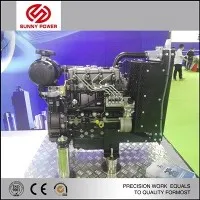
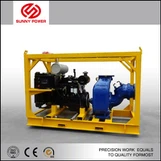
Weifang Sunny Power Machinery Co., Ltd. is located in China Power Capital - Weifang City, owning Chinese leader and world famous diesel engine manufacturers.
Having professional and experienced workers, supported by strong technology and advanced equipments, we successfully formed strict and perfect production procedure from design, production, testing, to after-service, which guarantee the stable quality and technology innovation. We have been approved by ISO9001 and CE.
Why Choose Us
100% Satisfaction Guarantee: We're so confident you'll be happy with our services, we guarantee it.
Extensive Experience: Our team of professionals have been in the business for quite some time. Let us deliver solutions that work the first time!
Fair & Competitive Pricing: Our pricing structure is designed to make a modest profit so that we can continue to be a Hero another day.


Advantages of Multi Function Diesel Engine
Efficiency. Using a compression-ignition system, multi function diesel engines are more efficient than gas. multi function diesel engines require more compression to heat the air. As the compression is greater, multi function diesel engines get hotter than a gas-powered motor. More energy and less fuel are produced, which means fewer trips to the pump to fill up.
Durability. Multi function diesel engines are built to handle higher temperatures. They'll typically last longer than gas engines, as long as drivers keep up to date with necessary maintenance.
Torque. Built to produce more energy, these engines produce higher amounts of torque. multi function diesel engines are built to do a lot of heavy lifting and haul large loads on a regular basis.
Valuable. As these engines are durable, that also means they're valuable. They have better resale value, and can last a long time.
What Is Multi Function Diesel Engine
The diesel engine, named after Rudolf Diesel, is an internal combustion engine in which ignition of the fuel is caused by the elevated temperature of the air in the cylinder due to mechanical compression; thus, the diesel engine is called a compression-ignition engine (CI engine). This contrasts with engines using spark plug-ignition of the air-fuel mixture, such as a petrol engine (gasoline engine) or a gas engine (using a gaseous fuel like natural gas or liquefied petroleum gas).
Inspect the Oil
One of the most important steps to consider when viewing a used multi function diesel engine for sale is the condition of the engine's oil. Start by removing the dipstick (or ask the owner to send you a video/picture) to view the color and appearance of the oil. If there is white coloring in the oil or milky characteristics about the oil's appearance, it can mean that there are internal problems with the engine, and it may need replacement.
No Servicing = Wear and tear
A multi function diesel engine should be serviced every 6 months at minimum or if functioning within an automobile every three thousand miles. When the correct servicing is not conducted regularly and the engine is left unoperated for long periods/continued to be operated regularly, this can significantly increase the probability of wear and tear and engine inefficiencies. A seller should always be able to provide the buyer with a service history of the engine, completed by professionally trained mechanics.
Size of the Engine (Horsepower)
Whether inspecting a used multi function diesel engine for sale or a new multi function diesel engine for sale it is important to consider the size of the engine you need. multi function diesel engines can be categorized into small, medium and large in terms of power, which have power outputs ranging from an average low of 50 horsepower to an average high of 1800 horsepower or more. By understanding your personal requirements, it can be easier to select the ideal engine and avoid choosing one that is over or undersized. On Surplus Record, we have available engines ranging in horsepower output from 10 – 2500 HP+.
Age
Age doesn't necessarily mean unreliability, especially if produced by a reputable manufacturer and serviced regularly. A reputable manufacturer is also likely to have produced a wider range of spare components and parts which makes sourcing these parts easier when the time comes. If the engine is over 10 years in age, it is advisable to inspect the manufacturer's name and request to view a service history to ensure a successful purchase.
Accessories
With a variety of accessories available in today's market for engines, it can be ideal to purchase a used or new engine with such extras. Cooling fans can be a desirable accessory for multi function diesel engines for those who desire improved fuel economy and reduction in noise, as well as more efficient performance. Purchasing these fans or an engine which has a fan included is highly recommended by the Surplus team.
Applications of Multi Function Diesel Engine


On the Road
The vast majority of modern heavy road vehicles like trucks and buses, ships, long-distance trains, large-scale portable power generators, and most farm and mining vehicles have multi function diesel engines. However, in some countries they are not nearly as popular in passenger vehicles as they are heavier, noisier, have performance characteristics that make them slower to accelerate. In general, they are also more expensive than petrol vehicles. Modern multi function diesel engines have come a long way and with Turbo Direct Injection systems now in vehicles, one would be hard-pressed to notice a difference between diesel and gasoline engines.
In some countries, where tax rates make diesel fuel much cheaper than petrol, diesel vehicles are very popular. Newer designs have significantly narrowed differences between petrol and diesel vehicles in these areas. The BMW diesel lab in Austria is considered to be the worldwide leader in the development of automotive multi function diesel engines. After a long spell with relatively few diesel cars in its lineup, Mercedes Benz has returned to diesel-powered cars in the 21st century with an emphasis on high performance.
In the agricultural field, tractors, irrigation pumps and threshing machines and other equipment are predominantly diesel powered. Construction is another sector that relies heavily on diesel power. All concrete pavers, scrapers, rollers, trenchers and excavators run on diesel.
In the Air
Cell Phone Tower
A few airplanes have been using multi function diesel engines since the late 1930s. The newer automotive multi function diesel engines have power-weight ratios comparable to the ancient spark-ignition designs and have far superior fuel efficiency. Their use of electronic ignition, fuel injection, and sophisticated engine management systems also makes them far easier to operate than mass-produced spark-ignition aircraft engines. The cost of diesel fuel compared to petrol has led to considerable interest in diesel-powered small general aviation planes, and several manufacturers have recently begun selling multi function diesel engines for this purpose.
On the Waters
High-speed engines are used to power tractors, trucks, yachts, buses, cars, compressors, generators and pumps. The largest multi function diesel engines are used to power ships and liners along the high seas. These huge engines have power outputs up to 90,000 kW, turn at about 60 to 100 rpm, and are 15 meters tall.
Under the Ground
The mining and mineral extraction sector worldwide relies heavily on diesel power to harness natural resources such as aggregates, precious metals, iron ore, oil, gas, and coal. Diesel-powered shovels and drills excavate these products and load them into enormous mining trucks or onto conveyer belts that also operate on the same fuel. Overall, diesel accounts for 72 percent of the energy used by the mining sector.
Both surface and underground mining operations rely on diesel-powered equipment to extract materials and load trucks. The largest rubber-tired, diesel-powered equipment used in mining are enormous off-road trucks with engines of over 2,500 horsepower, capable of hauling over 300 tons per load. These giant trucks trundling across the land are a sight to behold.
In the Hospitals
Emergency backup generators are a must have for any major medical healthcare facilities. Due to the critical nature of the work these facilities do and the position their patients are in, power failures are simply not an option. For many years, both military and public hospitals have relied on industrial strength generator sets to take over whenever the power goes out, whether it's from a local outage or major natural disaster like a hurricane or flood.
Data Center Behind the Data centers
Computers are at the heart of today's industry. When servers and systems go down, communications can be lost, business stops, data is lost, workers sit idle, and just about everything comes to a halt. It is for that reason that almost all communications and telecommunications companies of all shapes turn to diesel generators as their primary backup power option. With the reliability of their services affecting so many people, they really have no choice but to have a solid backup power option in place for both their business, and the customers they serve.
If you are one who drives many highway miles, diesel is more efficient than gas engines, offering more energy from every gallon, with more torque and faster acceleration. They are not quite so efficient for city driving, although still better than gas engines.
Generally, the cost of diesel and gas fuels are about the same, fluctuating as the market changes. However, diesel fuel will still cost you less over the life of your vehicle. You would need an 8-liter gas engine to achieve the same amount of power as a 6-liter multi function diesel engine.
Multi function diesel engines are more durable and longer-lasting than gas engines, with less required maintenance (they have fewer parts that could malfunction) while providing reliable operation. The weight of a diesel vehicle is also much more comparable to a gas vehicle, thanks to modern manufacturing advancements.
Multi function diesel engines don't require tune-ups because they don't have spark plugs or distributors.
Why Multi Function Diesel Engines Last Longer
Multi function diesel engines have a justly earned reputation of lasting longer than petrol (aka gasoline) engines. Why? Part of the reason owes to the inherent differences in construction between the two types of engines, most of which occur in the combustion section of the engine. For instance, when igniting fuel, gasoline engines rely on their fuel's tendency to evaporate quickly, and they function by compressing gasoline and air, which is then ignited via a spark plug. But diesel doesn't evaporate as easily. This means that diesel engines simply compress air as part of their combustion process, shooting atomized fuel into high-temperature air. The pressures involved in this process mean that diesel engines need larger crankshafts and camshafts, which tend to last longer due to their sturdiness. The atomization process constantly lubricates the engine's moving parts, reducing wear. And diesel engines employ more stable gears rather than the timing belts used in gasoline engines.
The nature of diesel itself also aids engine longevity. As mentioned previously, the atomization of diesel during combustion helps reduce component wear. Diesel also ignites at a lower temperature (410°F versus gasoline's 495°F), which puts less heat stress on the engine. Diesel also lacks the somewhat acidic nature of gasoline and won't wear away components such as piston cylinder rings.
Finally, diesel engines are typically more efficient and operate at lower revolutions per minute (RPMs) than gasoline engines. This leads to less overall wear in general.
The Most Important Maintenance Tips for Multi Function Diesel Engines
Regularly Clean Your Engine
It's always a good idea to keep your engine clean. No matter what type of vehicle you're driving, you will kick up dirt, dust, and other debris from the road. Your engine also has a lot of fluids and oil running through it, which may cover your machine in layers of soot and other irritants you don't want to deal with.
Aside from maintaining the good condition of your engine, it's advantageous to keep it clean to identify any future leaks or problem areas that may arise.
Salt is a common concern if you use a multi function diesel engine in your boat or drive in colder climates with a lot of snow. Clean the salt off your engine to reduce the exposure time and help reduce the risk of rust and deterioration. This will increase the overall lifespan of your engine significantly.
Maintain Your Radiator and Coolant
Remember that diesel runs hotter than gasoline, so it's imperative to take precautions and avoid your engine overheating. Overheating can cause immediate and long-term damage to your engine and create costly problems that shorten its lifespan.
To avoid warping and damaging parts of your engine, you want to keep your radiator in good condition. As your engine uses coolant to pick up the heat, it goes through the radiator, which cools down by air blowing through your vehicle's front grill. Because the radiator takes in all the heated coolant, it's likely to wear down over time. We recommend checking your radiator and flushing out your coolant system every 50,000 miles.
Coolant becomes more acidic the longer it runs through your system. When you inspect your radiator, it's a good idea to flush out your coolant. Replacing it keeps your system in better condition.
Fix Your Filters
When you consider the most important maintenance tips for your multi function diesel engine, you don't want to neglect your filters. Your air filter is the first one you want to keep an eye on. The air that runs through your engine combines with the fuel, and that's an essential part of the combustion that keeps your engine running. Naturally, the air filter helps remove dirt and grime from the air so that what goes into your engine is cleaner.
The more your air filter collects, the harder it is for air to go through it, which means your engine puts out more power than it needs to in order to achieve a weaker result. Frequently, you may notice your engine feeling a bit weaker than expected, and sometimes that's a simple matter of cleaning or replacing the air filter. A good rule of thumb is to clean out the air filter every 10,000 to 12,000 miles to help ensure the clogs don't become too much of a burden.
Your multi function diesel engine also has a fuel filter. Newer engines may have two separate fuel filters that collect different amounts of pollutants and irritants found in the fuel. It's also a good idea to separate these filters every 10,000 to 15,000 miles and check for any solid contaminants in your fuel. While your engine may have two filters, and one may have a more considerable build-up, we recommend changing both filters simultaneously to maintain consistency between the two and reduce any potential confusion about when you changed one but not the other.
Get Oil Changes
Oil is an essential feature of any engine. The oil typically acts as a lubricant to keep vital pieces moving smoothly; without fresh, clean oil, the parts may grind together. That grinding quickly causes damage and can lead to costly repairs, so it's something to avoid.
Diesel engines may require more frequent oil changes than traditional gasoline engines, but a safe window to consider is every three months or every 3,000 to 5,000 miles, whichever comes first. If you perform more labor-intensive driving or use your multi function diesel engine for heavier equipment, we suggest aiming closer to the 3,000-mile mark.
Always Mind Your Fluids
Many of the essential maintenance tips for your multi function diesel engine are things you want to check after thousands of miles, but some things you should always keep a closer eye on it. Aside from your oil and engine coolant, several vital fluids help keep your engine running.
You want to maintain diesel exhaust fluid and even wiper fluid in the event of a dusty road or other obstructions while you're driving. We suggest opening the hood and checking that your engine's vital fluids are at suitable levels every two to three weeks.
Maintain Your Exhaust System
In many ways, what comes out of your engine is as important as what goes into it. Watching your exhaust system can help you identify specific problems. Do you notice more smoke than usual, or is it an unusual color? When particles in your engine heat up, they may expel as ash and carbon monoxide. Like your air and fuel filters, your multi function diesel engine has a diesel particulate filter (DPF) that helps maintain your exhaust. If you notice any abnormalities, you may need to take care of them.
Our Factory
Weifang Sunny Power Machinery Co., Ltd. is located in China Power Capital - Weifang City, owning Chinese leader and world famous diesel engine manufacturers.
Having professional and experienced workers, supported by strong technology and advanced equipments, we successfully formed strict and perfect production procedure from design, production, testing, to after-service, which guarantee the stable quality and technology innovation. We have been approved by ISO9001 and CE.
FAQ
Q: What is multi-cylinder diesel engine?
Q: What are the 3 main diesel engines?
Q: What are the two types of diesel engines?
4-Stroke Diesel Engine: In a 4-stroke engine, the pistons move up and down twice-for a total of four strokes.
Q: What is the new diesel engine technology?
Q: What are the advantages of multi cylinder diesel engines?
Q: Are 3 cylinder diesel engines reliable?
Q: Why are diesel engines going away?
Q: Why are diesel engines so powerful?
Q: What is the life expectancy of a diesel engine?
The general consensus in the industry is that a well-maintained diesel engine will last anywhere between 1,000,000 and 1,500,000 miles without needing any major repairs. Some makes and models can last up to 30 years on the road, which is more than twice as long as the average gas-powered vehicle.
Q: Why are diesel engines so dirty?
Q: Is it good to rev a diesel engine?
Q: How cold is too cold for diesel engines?
Q: Should you rev a cold diesel engine?
Q: What is the idle speed for diesel engine?
In general, diesel engines typically idle at around 600 to 800 RPM (revolutions per minute). To adjust the idle RPM of a diesel engine, you will typically need to locate the idle speed adjustment screw or knob on the engine's fuel pump or throttle linkage.
Q: How long should a diesel engine idle after overhaul?
Q: What are the five symptoms that an engine needs to overhaul?
White Smoke from the Car. If you notice white smoke coming out of your car, it indicates a problem with your car's engine.
Engine Overheating, Increased Temperature.
Engine Consuming Black Oil.
Underpower Issues, Low Pressure.
Fouled Spark Plug.
Q: What is the best way to break-in a new diesel engine?
Q: Is it worth rebuilding a diesel engine?
Q: How many miles can a diesel engine in a truck if properly maintained?
That said, while most gas engines are intended to last at least 200,000 miles on average, a diesel truck that is well-maintained can potentially last 350,000 to 500,000 miles. Those used mainly for highway driving and carrying minimal loads will typically get closer to the top-end of the range.
Q: How do you start a rebuilt diesel engine for the first time?
Disconnect the distributor or unplug the igniters. Unplug the fuel injectors or make sure that gasoline is not going into the intake manifold at this point.
Connect the battery and crank the engine unt.
Hot Tags: multi function diesel engine, China multi function diesel engine manufacturers, factory, underground tunnel mining pump, compact silent generator, excavator driving hydaulic pump, tractor driving big outflow pump, self priming pond pump, tractor rear driving dewatering pump