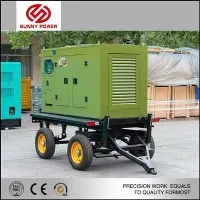
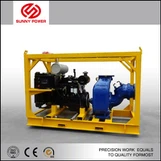
Weifang Sunny Power Machinery Co., Ltd. is located in China Power Capital - Weifang City, owning Chinese leader and world famous diesel engine manufacturers.
Having professional and experienced workers, supported by strong technology and advanced equipments, we successfully formed strict and perfect production procedure from design, production, testing, to after-service, which guarantee the stable quality and technology innovation. We have been approved by ISO9001 and CE.
Why Choose Us
100% Satisfaction Guarantee: We're so confident you'll be happy with our services, we guarantee it.
Extensive Experience: Our team of professionals have been in the business for quite some time. Let us deliver solutions that work the first time!
Fair & Competitive Pricing: Our pricing structure is designed to make a modest profit so that we can continue to be a Hero another day.


Advantages of Low Noise Diesel Generator
Relatively low maintenance. This is because the generator's engine requires fewer components to start, so you won't have to worry about changing spark plugs or rebuilding carburetors like you would have to with a gas engine.
Durability. Low noise diesel generators are quite tough in the workplace, so they will hold up through much wear and tear in a variety of environmental conditions.
Safe storage. While still flammable, diesel carries a much lower risk for igniting than other types of fuel, like gasoline.
Power output. Low noise diesel generators are capable of handling larger power loads and will run for longer durations than other types of generators available.
More rugged and reliable.
Easy access to fuel. Often portable diesel generators are transported on the back of diesel vehicles. This means you don't need to have two different fuel types when you're out and about doing work.
What Is Low Noise Diesel Generator
As the name suggests, silent diesel generators are designed to reduce the noise produced during power generation. The'super silent'category furthers this, promising noise levels as low as 50-65 decibels - equivalent to a normal conversation or a running dishwasher.
Uses of Low Noise Diesel Generators
In today's technology-driven era, practically every part of an operation requires electricity in one way or another. low noise diesel generators ensure minimal workflow interruptions, even in the event of widespread power failures. That's why they play a vital role in many of the modern world's most demanding industries.
COMMERCIAL
Most commercial establishments keep everything online, from stock counts to security measures. Even a few minutes of lost power can lead to significant delays in assisting customers and completing time-sensitive operations. A diesel generator keeps business running as usual even when your primary power supply is out of commission.
CONSTRUCTION
When construction crews are breaking new ground, they can't always rely on a nearby power source to connect their electrical equipment. Even if there is an existing power grid to draw from, it may not be able to handle all the simultaneous power-drawing operations necessary for the project. Still, those tools are vital to a safe, productive working environment that allows crew members to get their jobs done on time.
A diesel generator is portable, so it can go with a construction team to any site and follow them from project to project. A downed or nonexistent power grid will never be the cause of lost time when workers can simply switch to a strong alternative source.
MANUFACTURING
Manufacturing lines have quotas to meet, and they frequently work with materials that must be processed in a certain way. A lack of power, or even having less power than normal, can lead to inconsistencies in the final output and a lesser-quality result. More than hurting productivity, even one run that results in low-quality products can damage consumer relationships and hurt profits in the long run.
A powerful diesel source with a consistent energy supply helps ensure that customers get the same quality every time, contributing to strong, lucrative relationships.
OIL AND GAS
Operations like drilling and pumping require a strong supply of energy - sometimes in areas with no power grid available. Since the machinery involved in drilling generates a high degree of demand, this is an area in which diesel generators excel. Oil and gas are necessary for powering our world, and diesel generators are sometimes the only solution to help drilling companies finish the job with minimal strain on the surrounding resources.
MINING
Like the oil and gas industry, mining usually involves work in locations that don't have easy access to a power source unless the company brings one along. low noise diesel generators are necessary to allow heavy equipment to drill deep within the earth and reach those natural treasures a company is searching for.
POWER PLANTS
Power plants are vital for entire communities, towns and cities. They need reliable primary and backup power sources to keep their customers happy and ensure critical infrastructure maintains power access in the case of failure. low noise diesel generators are often the only choice powerful enough to fit these needs.
REAL ESTATE PROPERTIES
During the process of selling a home, a realtor may be dealing with electrical transitions that leave the property without power for some time. To highlight the best parts of the structure in open houses and showings, electricity is vital for making a good impression. Having a backup generator that can keep the whole house running will likely improve chances of getting an offer or making a sale.
Similarly, landlords are often responsible for ensuring their tenants have all the necessary utilities to run their homes, and that includes electricity. In the event of a local power outage, a diesel generator can help property managers continue to perform their duties.
A low noise diesel generator refers to a diesel-powered generator that is specifically designed to operate with reduced noise levels. These generators are commonly used in various applications where noise reduction is important, such as residential areas, outdoor events, construction sites, or any environment where noise pollution needs to be minimized.
Here are some key features and considerations of a low noise diesel generator :
Acoustic Enclosure: Low noise diesel generators are typically enclosed in soundproof or acoustic enclosures. These enclosures are constructed with materials that absorb and dampen noise, minimizing the sound produced by the generator during operation.
Noise-Reducing Design: The generator may incorporate design features that help reduce noise emissions. This can include the use of vibration isolators, anti-vibration mounts, and noise-absorbing insulation materials to minimize vibrations and noise transmission.
Muffler and Exhaust System: The exhaust system of a low noise diesel generator is often designed with mufflers and silencers to reduce exhaust noise. These components help to dampen the sound produced by the exhaust gases.
Engine Design: The generator may utilize engine designs that focus on noise reduction. This can include advanced fuel injection systems, improved combustion processes, and noise-reducing technologies to minimize engine noise output.
Remote Monitoring and Control: Some low noise diesel generator s may feature remote monitoring and control capabilities. This allows operators to monitor the generator's performance, adjust tings, and control operations from a remote location, reducing the need for direct proximity to the generator and minimizing noise exposure.
Compliance with Noise Regulations: Low noise diesel generator s are designed to meet or exceed applicable noise regulations and standards in the specific region or industry where they are used. Compliance with these regulations ensures that the generator operates within acceptable noise limits.
It's important to note that while low noise diesel generator s significantly reduce noise emissions, they may still produce some level of noise during operation. The noise level can vary depending on factors such as the generator's size, power output, and specific operating conditions.
When selecting a low noise diesel generator , consider factors such as the required power capacity, fuel efficiency, reliability, and compliance with noise regulations. Consulting with generator suppliers or specialists can help you choose a generator that meets your specific noise reduction requirements.
How Does A Low Noise Diesel Generator Work?


A low noise diesel generator is actually a machine that converts mechanical energy (produced by an in-built combustion engine) into electrical energy. There are different components of the low noise diesel generator that work in synergy to produce electricity. Some of these essential components of a power low noise diesel generator include:
Engine – Being the primary component of the low noise diesel generator set, the engine supplies the mechanical energy which is later transformed into electrical power. As a matter of fact, the power output of these low noise diesel generators is directly proportional to its engine's size.
Alternator – This is another key component of a low noise diesel generator that uses the mechanical input supplied by the engine and converts it into electrical output. An alternator includes a rotor that produces a magnetic field to eventually generate some alternating current. This is why the rotor is referred to as the main part of the alternator.
Fuel System – This component stores and supplies the fuel to the generator. In general, a fuel system can easily keep a 62.5KVA silent generator running for about 6 to 8 hours.
Lubricating System – This unit ensures the smooth functioning of different parts of a low noise diesel generator. This is why it is recommended to keep a proper check on the lubricating system of the generator to avoid any malfunctioning.
Control Panel – This unit not only includes the Start/Stop button but also contains indicators for various parameters like current, voltage, and frequency. You can easily operate your 2.5KVA portable generator through its control panel.
Routine General Inspection
The exhaust system, fuel system, DC electrical system, and engine must all be closely monitored during the operation of the low noise diesel generator for any leakage that could result in dangerous situations. Proper maintenance, as with any internal combustion engine, is critical. Diesel Genset is no different, and the most critical maintenance is oil changes every 500 hours of operation to ensure a long and trouble-free life, but some applications may demand shorter servicing times, which is why after-sales services must be excellent. If possible, inspect every two weeks, or once a month at the very least, for better low noise diesel generator maintenance. Regular inspections are also required for the alternator, controllers, AVR, and full sensor system, as well as wiring, harnesses for integrity.
Lubrication Service
Using a dipstick, check the engine oil while shutting down the generator at regular intervals. Allow the oil in the top areas of the engine to drain back into the crankcase, and follow the API oil classification and viscosity requirements provided by the engine manufacturer. Add the same grade and brand of oil to keep the oil level as close to the full mark on the dipstick as possible.
Oil and filters must be replaced at predetermined intervals. Check with the engine manufacturer for instructions on how to drain the oil and replace the oil filter, as well as how to properly dispose of them to avoid environmental damage or liability.
Cooling System
During shutdown times, check the coolant level at the set interval. After allowing the engine to cool, remove the radiator cap and, if necessary, add coolant until the level is about 3/4 in. Also, keep an eye on your coolant filters and replace them as needed. A balanced coolant mixture of water, antifreeze, and coolant additives is required for heavy-duty diesel engines. Examine the radiator's exterior for obstructions, then remove any debris or foreign material with a soft brush or cloth, being careful not to damage the fins. Radiator flushing is also an important part of low noise diesel generator maintenance to minimize overheating and excessive engine temperatures. If low-pressure compressed air or a stream of water in the opposite direction of typical airflow are available, use them.to clean the radiator.
Fuel System
Within a year, low noise diesel generators is susceptible to contamination and corrosion, thus regular generator set exercise is strongly recommended to burn up stored fuel before it declines. Because of the water vapour that builds and condenses in the fuel tank, the fuel filters should be drained at the appropriate intervals.
If the gasoline is not utilised and replaced in three to six months, regular testing and fuel cleaning may be required. A routine general inspection should involve checking the coolant level, oil level, fuel system, and starting system as part of preventive maintenance. Regularly inspect the charge-air cooler piping and hoses for leaks, holes, cracks, dirt, and debris that may be blocking the fins or loose connections.
While the engine retains its mechanical properties, it is susceptible to issues with diesel fuel quality. The chemical make-up of diesel fuel has altered in recent years; at low or high temperatures, a certain proportion of biodiesel releases contaminants, while at warm temperatures, a certain percentage of biodiesel mixed with water (condensation) might be a breeding ground for bacteria. Furthermore, reducing Sulphur diminishes lubrication, which eventually causes the fuel-injection pumps to become clogged.
Furthermore, when acquiring a genset, it is crucial to be aware that a variety of optional accessories are available to extend maintenance intervals and guarantee that the genset continues to provide reliable power throughout its life.
Testing Batteries
Standby power system failures are frequently caused by weak or undercharged starter batteries. The battery must be kept completely charged and well-maintained to minimise diminishing, with frequent testing and inspection to determine the battery's current status and avoid any generator start-up issues. They must also be cleaned and the battery's specific gravity and electrolyte levels must be checked on a regular basis.
Testing batteries: Measuring the output voltage of the batteries is insufficient to determine their ability to provide adequate starting power. Because batteries' intrinsic resistance to current flow increases as they age, the only correct way to determine terminal voltage is under load. This suggestive test is conducted automatically on some generators each time the generator is started. Use a manual battery load tester on other generator sets to check the condition of each starting battery.
Cleaning the batteries: Wipe them off with a moist cloth anytime dirt appears to be excessive. Remove the battery cables and wash the terminals with a solution of baking soda and water (14 pound baking soda to 1 quart water) if corrosion is present around the terminals. Make sure the solution doesn't get into the battery cells, and after you're done, flush the batteries with clean water. Apply a little coating of petroleum jelly to the terminals after reinstalling the connections.
Checking the electrolyte level in open-cell lead-acid batteries: Check the electrolyte level at least every 200 hours of operation in open-cell lead-acid batteries. Fill the battery cells with distilled water to the bottom of the filler neck if they are low. When the generator is not in use, always unplug the batteries.
Routine low noise diesel generator maintenance exercise
Regular exercise keeps engine parts lubricated and prevents oxidation of electrical contacts, uses up gasoline before it degrades, and aids in engine starting reliability. Engine exercise should be performed at least once a month for at least 30 minutes with the engine loaded to one-third of the nameplate rating.
Keep your low noise low noise diesel generator Clean
When the engine is nice and clean, oil drops and other faults are easy to identify and fix. Hoses and belts can be visually inspected to ensure that they are in good working order. Checking your equipment on a regular basis can prevent wasps and other annoyances from nesting in it. The more a generator is utilized and relied on, the more maintenance it requires. A generator set that is infrequently utilized, on the other hand, may not require as much attention.
Our Factory
Weifang Sunny Power Machinery Co., Ltd. is located in China Power Capital - Weifang City, owning Chinese leader and world famous diesel engine manufacturers.
Having professional and experienced workers, supported by strong technology and advanced equipments, we successfully formed strict and perfect production procedure from design, production, testing, to after-service, which guarantee the stable quality and technology innovation. We have been approved by ISO9001 and CE.
FAQ
Q: What is the most quiet diesel generator?
Every W-SQ (Super Quiet) 22.5 WhisperPower diesel generator is designed for non-stop, 1500/1800 rpm operation under harsh circumstances. They are robust, silent, compact and extremely reliable.
Q: What is a silent diesel generator?
Engine is enclosed in a sound shielded cover, which makes for a quieter design makes it ideal to provide backup power to a home or small business. Perfect solution to get your home or business through blackouts or load shedding periods.
Q: How do you reduce the noise of a diesel generator?
Use Anti-vibration Mount to Reduce the Noise Level of Diesel Generator. ...
Attenuators. ...
Generators with Noise Levels Less than 75 Db. ...
Acceptable Generator Noise Level in India.
Q: What is a downside of using diesel generators?
Q: How noisy are diesel generators?
Q: Are diesel generators quieter than gas?
Q: What is the life expectancy of a diesel generator?
Average Diesel Generator Life Expectancy Based on Usage
On average, diesel generators last from 10,000 to 30,000 hours of use. Usually, this equates to about 20-25 years of use.
Q: What can replace diesel generators?
Q: Do diesel generators need to rest?
Q: What is considered high hours on a diesel generator?
Q: Can diesel generators run continuously?
Q: How often should you change oil in a diesel generator?
Q: What are the negative effects of diesel generators?
Q: What size diesel generator would you need to run a house?
Q: What happens when you run a diesel generator at no load?
The oil burns and oil consumption increases. Due to the poorly sealing piston rings, unburned fuel contaminates the lubricating oil, as does condensed water and residue, which cause a destructive acid build up.
Q: How long can I run a diesel generator without stopping?
Q: How much does it cost to run a diesel generator all day?
Q: What is the safe distance from a diesel generator?
Q: Are diesel generators worth it?
Q: How long can a diesel generator run continuously in a day?
Hot Tags: low noise diesel generator, China low noise diesel generator manufacturers, factory, tractor rear driving hydraulic pump, tractor driving big outflow pump, Self Priming Chemical Pump, genset marine, quarry dewatering pumps, diesel motor for agriculture