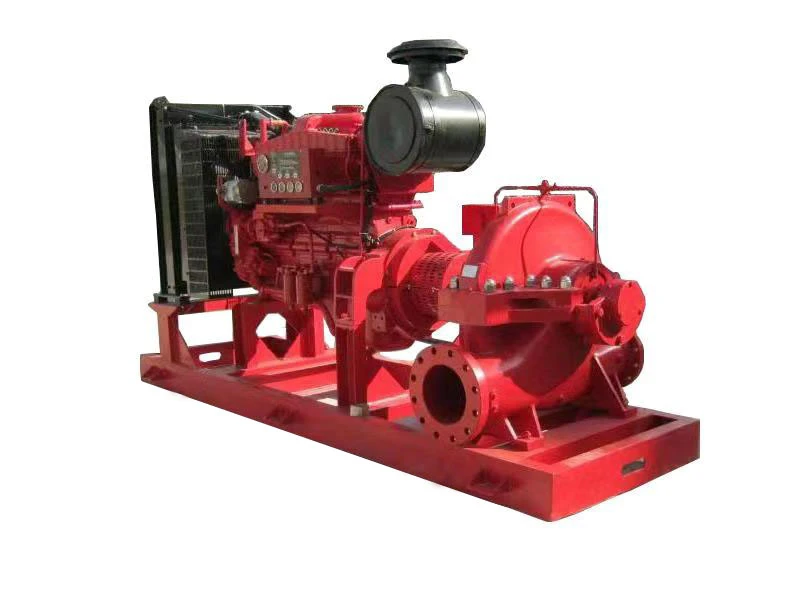
Fire pumps play a very important role in firefighting work, especially in high-rise buildings and long-distance fire water supply, which must use this equipment. So what details should be paid attention to when debugging fire pumps? The following is an introduction to this aspect.
1. When the fire pump is started automatically or manually, the pump should be put into normal operation within 55 seconds. When the fire pump is running, it should be observed whether there is bad noise or abnormal vibration.
2. To prevent the diesel engine fire pump from failing and being unable to be used normally, a backup power supply or backup pump is required. Once the main water pump fails, these backup plans can be used to replace the fire water supply work, so that the pump can be put into normal operation within two minutes.
3. After the fire pump is installed, an on-site performance test should be carried out to observe whether the performance of the pump is consistent with the equipment factory data provided by the manufacturer. Whether the performance meets the requirements of the design flow and pressure of the fire water supply.
4. When debugging a fire pump, if the pump has zero flow, the pressure should not exceed 1.4 times the design working pressure; if the flow is 1.5 times the design working flow, the outlet pressure of the pump should not be lower than 65% of the design working pressure.
From the above content, it can be seen that when debugging a pump, attention should be paid to: observing whether there is bad noise and abnormal vibration when the pump is running. There should be a backup power supply and backup pump, and on-site performance testing should be carried out.