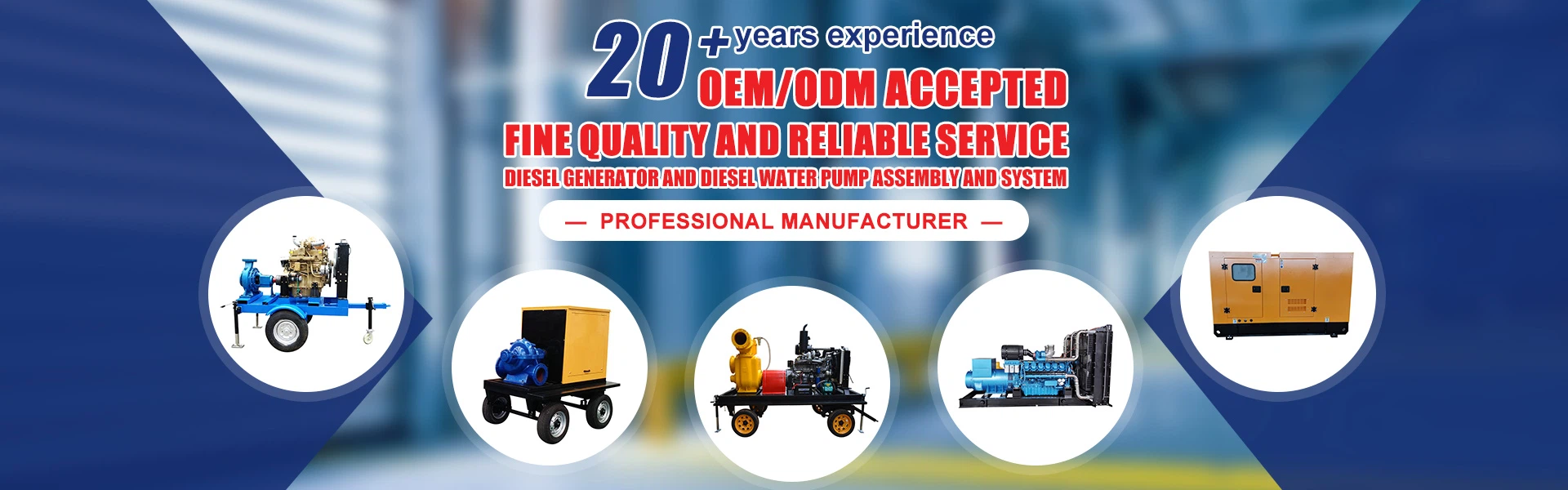
Weifang Sunny Power Machinery Co., Ltd. is located in China Power Capital - Weifang City, owning Chinese leader and world famous diesel engine manufacturers.
Having professional and experienced workers, supported by strong technology and advanced equipments, we successfully formed strict and perfect production procedure from design, production, testing, to after-service, which guarantee the stable quality and technology innovation. We have been approved by ISO9001 and CE.
Why Choose Us
100% Satisfaction Guarantee: We're so confident you'll be happy with our services, we guarantee it.
Extensive Experience: Our team of professionals have been in the business for quite some time. Let us deliver solutions that work the first time!
Fair & Competitive Pricing: Our pricing structure is designed to make a modest profit so that we can continue to be a Hero another day.




Advantages of Sprinkler Irrigation Pump
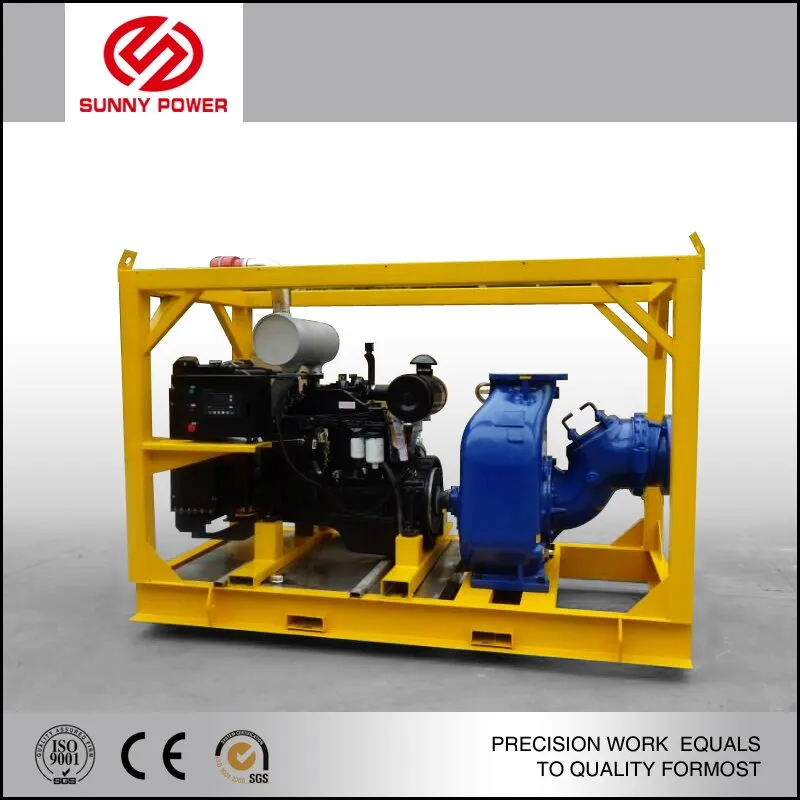
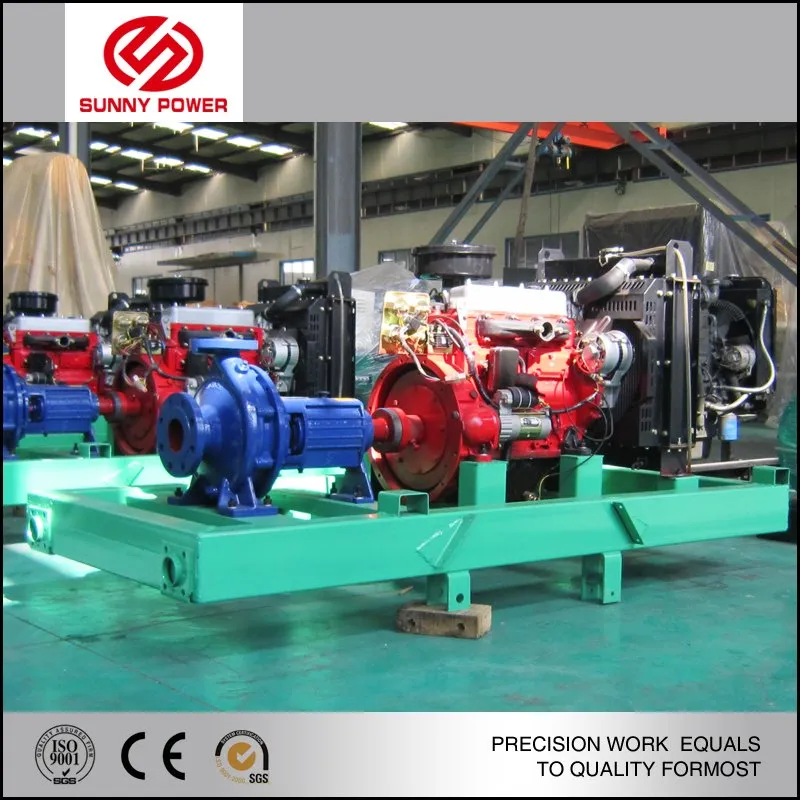
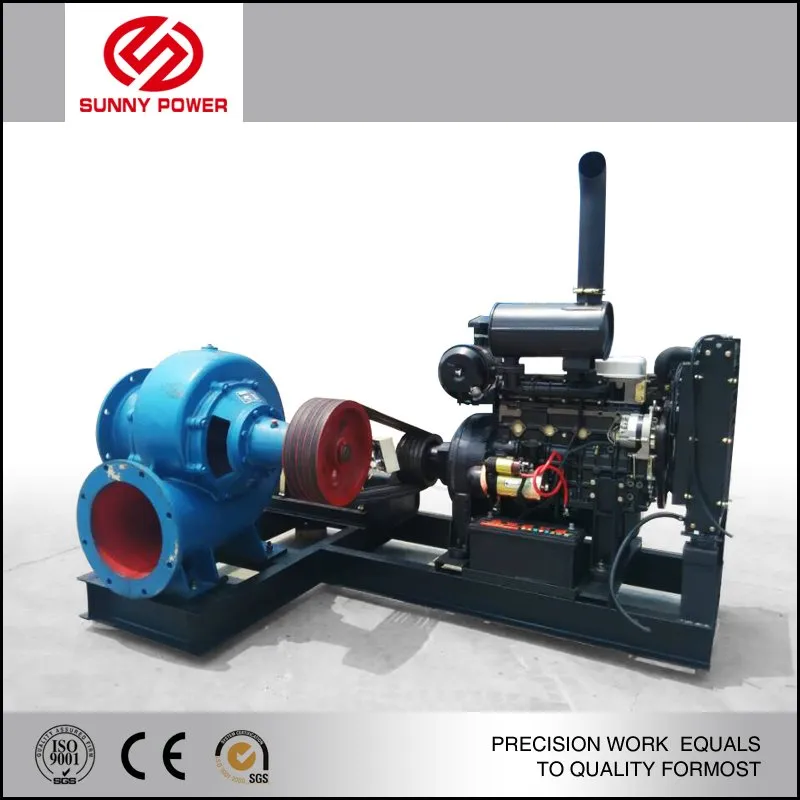
Irrigation System Flexibility– Agricultural irrigation systems are typically zoned by field size, crop type and/or crop maturation date. In many cases this type of zoning can lead to zones of widely different flow rates, especially when a grower may have several small or irregularly shaped fields. In the past the solution to this problem is to size the pump for the worst possible case and then try to come up with some combination of valves to get the pump to operate at the best efficiency point. Invariably there is always a zone or two where the pump is way oversized for the application. This can cause unnecessary wear and tear on the irrigation system and cause higher energy consumption and costs. The Variable Frequency Drive (VFD) allows the pump to be run at a lower speed thus reducing the pump's performance. The advantage of the VFD is that you can customize the way your irrigation systems runs by changing the pump's speed of rotation. This means a smaller zone can be run and the system will slow the pump down thus reducing the flow and pressure to deliver exactly what is needed to operate the smaller zone. This can provide a huge energy savings over the course of the growing season.
Water Conservation– Variable Frequency Drives (VFD's) also help in conserving our planets most valuable resource. VFD's conserve water by operating irrigation sprinklers at the optimum pressure. Over pressurized sprinklers tend to "fog" or mist as the higher pressure creates smaller water droplets through the sprinkler's nozzle. These smaller droplets are more susceptible to movement by wind and are more easily evaporated into the atmosphere. Water that evaporates before it hits the ground is obviously of no use to the plant.
Several Pumps In One– It used to be that irrigation pump stations consisted of a small "jockey" or pressure maintenance pump and one or more main pumps. The pump station control system turned pumps on and off depending on the flow rate required by the system at the time. The VFD essentially eliminates the need for the small jockey or PM pump. With a VFD now one of the larger pumps can serve as the jockey or PM pump to provide water to the system when the pressure and flow rate requirements are, but it can also step up and deliver higher flows and higher pressure when the system demand dictates.
What Is Sprinkler Irrigation Pump
Using a water pump provides flexibility with irrigation when it comes to field size and the types of crops planted. It also helps conserve water more efficiently than sprinklers, providing the best watering results for your crops.
Factors to Consider When Choosing an Sprinkler Sprinkler Irrigation Pump
When choosing an sprinkler irrigation pump, there are several factors to consider. Here are some of the most important:
Water source: The type of water source you have will impact the type of pump you need. If you have a shallow well or a river, a centrifugal pump may be sufficient. If you are using water from a lake or pond, a self-priming pump may be suitable. If your water source is located below ground level, a submersible pump / borehole may be necessary.
Water flow and pressure: The amount of water you need to move and the distance it needs to be moved will impact the pump's flow and pressure requirements. Make sure to choose a pump that can handle the specific requirements of your irrigation system and nozzle design. In general, centrifugal pumps are best for low- to medium-flow applications, while multistage pumps are better for high-pressure applications.
Power source: Irrigation pumps can be powered by electricity, engine driven via petrol or diesel, or solar energy. The type of power source you choose will depend on your location and specific needs. Electric pumps are generally the most convenient and easiest to maintain, but they may not be suitable if you are based in a remote location, or electricity output is unreliable due to power outages. Petrol and diesel driven pumps can handle large volumes of water, offer better mobility if mounted on a trailer but are generally more expensive and require more maintenance.
Maintenance and Durability: Ensure designs of pumps are chosen which are easy to maintain and built to last. Look for pumps made from suitable higher-grade materials for durability such as ductile grades of cast iron, or stainless steel in particular if units will be located in unsheltered areas and exposed to the elements. Ensure correct filtration is used on pump suction pipework to ensure pumps remain clean and free from debris, and perform regular maintenance as recommended by the manufacturer.
Total Static Head
The total static head is the vertical distance the pump must lift the water. When pumping from a well, it would be the distance from the pumping water level in the well to the ground surface, plus the vertical distance the water is lifted from the ground surface to the discharge point. When pumping from an open water surface, it would be the total vertical distance from the water surface to the discharge point.
Pressure Head
Sprinkler and drip irrigation systems require pressure to operate. Center pivot systems require a certain pressure at the pivot point to distribute the water properly. The pressure head at any point where a pressure gauge is located can be converted from PSI to feet of head by multiplying by 2.31.
For example, 20 PSI is equal to 20 times 2.31, or 46.2 feet of head. Most city water systems operate at 50 to 60 PSI, which, as illustrated in Table 1, explains why the centers of most city water towers are about 130 feet above the ground.
Friction Head
Friction head is the energy loss or pressure decrease due to friction when water flows through pipe networks. The velocity of the water has a significant effect on friction loss.
Loss of head due to friction occurs when water flows through straight pipe sections, fittings or valves; around corners; and where pipes increase or decrease in size. Values for these losses can be calculated or obtained from friction loss tables. The friction head for a piping system is the sum of all the friction losses.
Velocity Head
Velocity head is the energy of the water due to its velocity. This is a very small amount of energy and is usually negligible when computing losses in an irrigation system.
Importance of Sprinkler Irrigation Pump for Agriculture Irrigation


Irrigation is the process of supplying water artificially to the land, there are many irrigation systems that requires sprinkler irrigation pump as it plays important role in lifting the water. Water pump is one of main invention used for sprinkler irrigation pumping purpose and can assist in efficient irrigation like agriculture, lawn maintenance etc.
Agriculture is primary source of focus for farmers and there are lots of issues that farmers come across like lack of water resource, lack of electricity etc. As we all know that agriculture irrigation is the process of transferring water to the soil that can enhance agriculture productivity at lower cost. So, the efficient agriculture irrigation requires a continuous water supply and agriculture pump are designed and integrated to fulfill this need as a part of agriculture irrigation system
There are several benefits of sprinkler irrigation pumps, and they are:
Water pumps are easily available in lower cost.
These pumps come in wide range of variety where framers can easily buy from based on the capacity of pumps as per their needs or can even rent instead of buying.
Water pumps are used to provide high irrigation efficiency by supplying proper amount of water to every area of the field to gain speed in cultivation.
Low maintenance is required as it they come with less moving parts which eases the work.
These sprinkler irrigation pumps are also utilized to remove water from heavy rains to move it from area to another.
Performance of Various Irrigation Pumps
The pumps performance is affected by two variables. The horsepower of the motor attached to the pump is the first variable. A pump has two parts the pump which actually moves the water and the motor which moves the pump. Bigger motors have more volume and pressure, an advantage if your pump that can attach to different sizes of motors. Size of the impeller is the second variable.
The impeller is responsible for moving the water by spinning and causing a centrifugal action. If you have higher pressure than what your system requires it may cause your system to waste energy. Determining the proper pump depends on the model and size that produces GPM. GPM is the flow amount that the pump is about to produce. It also relies on the head which is measured in feet of head; the amount of pressure the pump is able to produce.
A way to determine the impeller size you need is to draw an impeller curve through the feet head/GPM intersecting point making your curve parallel to the other impeller curves. Ultimately it would probably be easier and time-saving to contact a pump dealer and provide them with your GPM and feet head you are looking to pump and they can provide you with the best fit for your irrigation needs.
Sprinkler irrigation pump Won't Turn On
If your pump isn't turning on, relax, it could be an easy fix. First things first – check your breaker. If it isn't turned on or if it's tripped, you may just need to reset it. If you reset a tripped breaker, and it continues to trip you may have an issue with the wires running to the pump or the pump motor itself - or some other issue that's causing your pump to get too little electricity – or too much. In either case, it will not turn on.
Think you want to fix this yourself? Think again. Wiring involved with most irrigation systems is quite complex, so calling your irrigation specialist almost always the smarter move. Not only is there less risk to you, the job usually gets done in less time, because the specialist knows what they're looking for. Plus, we can mend spliced lines, rewired electric solenoid valves, replace your transformer or install lower voltage control wiring - whatever needs to be done.
There Is No Water
One of the most obvious signs that something isn't operating correctly in your irrigation system is a loss of water, or no water at all. But before you blame the issue on your pump, you'll want to check all of your valves and lines. You could do this yourself or call the pros. We, of course, recommend the latter. When it comes to troubleshooting, your irrigation specialist knows just what to do.
Your Irrigation System Isn't Working Like It Used To
When your system isn't performing up to your standards, a blockage may be the culprit. For example, leaves and other types of outdoor debris can get into your system and block the intake screen on your foot valve, restricting the amount of water the pump can deliver. And, if smaller particles get past that same intake screen, they could become trapped in the impeller vanes, which can have an adverse effect on your pump's performance.
Another cause of low performance is the loss of prime – which can happen even in self-priming pumps. Priming means filling the pump casing and suction piping with water, making sure there is no air in the suction piping. Even self-priming pumps need their casings filled with water before they will pump. If a pump repeatedly loses prime between watering cycles, you probably have a leaking foot valve.
Your System Wasn't Drained Before the Frost
When does your system need to be drained? Before temperatures drop before freezing (Typically Not Florida). This isn't an issue in the summer of course, but if you have an older system that doesn't drain out automatically, you could be in for a world of hurt if you forget to drain it when the frost comes. If water is in the impeller when temperatures drop below freezing, that water could expand and crack your pump. Always make sure your system is drained if freezing temperatures are in the forecast.
Your Pump Sounds Like It Has Rocks In It
The suction lift is the vertical distance between the water surface and the pump inlet. When this suction lift is too high, the pump will start to sound like it has rocks in it. This noise is caused by cavitation, which can harm the internal components of the pump. Sometimes, relocating the pump closer to the water source solves the problem - at least temporarily.
Our Factory
Weifang Sunny Power Machinery Co., Ltd. is located in China Power Capital - Weifang City, owning Chinese leader and world famous diesel engine manufacturers.
Having professional and experienced workers, supported by strong technology and advanced equipments, we successfully formed strict and perfect production procedure from design, production, testing, to after-service, which guarantee the stable quality and technology innovation. We have been approved by ISO9001 and CE.
FAQ
Q: What is the difference between a sprinkler pump and a jet pump?
Q: Do I need a pressure tank for my irrigation pump?
Q: Do I need a check valve on my irrigation pump?
Q: Do all sprinkler systems have a pump?
Q: Can you rebuild an irrigation pump?
Q: Why is my sprinkler not pumping water?
Q: How do I know what size irrigation pump I need?
Q: Where should a sprinkler pump be placed?
Q: What is the difference between a jet pump and a sprinkler pump?
Q: What happens if an irrigation pump runs dry?
Q: Why does my irrigation pump not hold pressure?
Q: How do I increase the pressure in my sprinkler pump?
If the pressure is a little low, try turning this dial to increase the pressure manually. For a fixed spray system, aim for 20-30 psi per sprinkler. On a rotor/pop-up system, shoot for 30-60 psi. Irrigation and drip systems require 20-40 psi.
Q: What PSI should a irrigation pump be?
Q: How far can a sprinkler pump pull water?
Because sprinkler pumps aren't designed for suction head over 25 feet, you want to install them as close to the water source as possible. Irrigation pumps aren't capable of sucking water beyond 25 feet above their water source.
Q: Do I need a pressure tank for my irrigation pump?
Q: How many sprinklers can a 1.5 HP pump run?
Q: Can I use a pump to increase water pressure for sprinklers?
Q: Why is the water pressure so low on my sprinkler system?
Q: Why is my sprinkler system not pumping water?
Q: How do you unclog an irrigation system?
Hot Tags: sprinkler irrigation pump, China sprinkler irrigation pump manufacturers, factory, tractor rear driving vertical submersible water pump, soft shaft water pump, portable diesel home generator, Self Priming Well Water Pump, Diesel Engine, submersible mining pumps