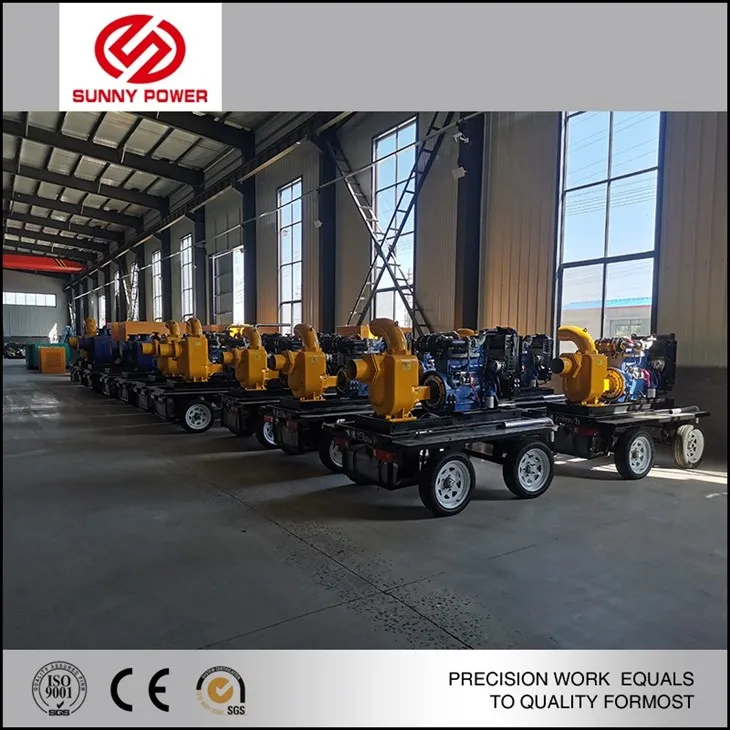
Weifang Sunny Power Machinery Co., Ltd. is located in China Power Capital - Weifang City, owning Chinese leader and world famous diesel engine manufacturers.
Having professional and experienced workers, supported by strong technology and advanced equipments, we successfully formed strict and perfect production procedure from design, production, testing, to after-service, which guarantee the stable quality and technology innovation. We have been approved by ISO9001 and CE.
Why Choose Us
100% Satisfaction Guarantee: We're so confident you'll be happy with our services, we guarantee it.
Extensive Experience: Our team of professionals have been in the business for quite some time. Let us deliver solutions that work the first time!
Fair & Competitive Pricing: Our pricing structure is designed to make a modest profit so that we can continue to be a Hero another day.

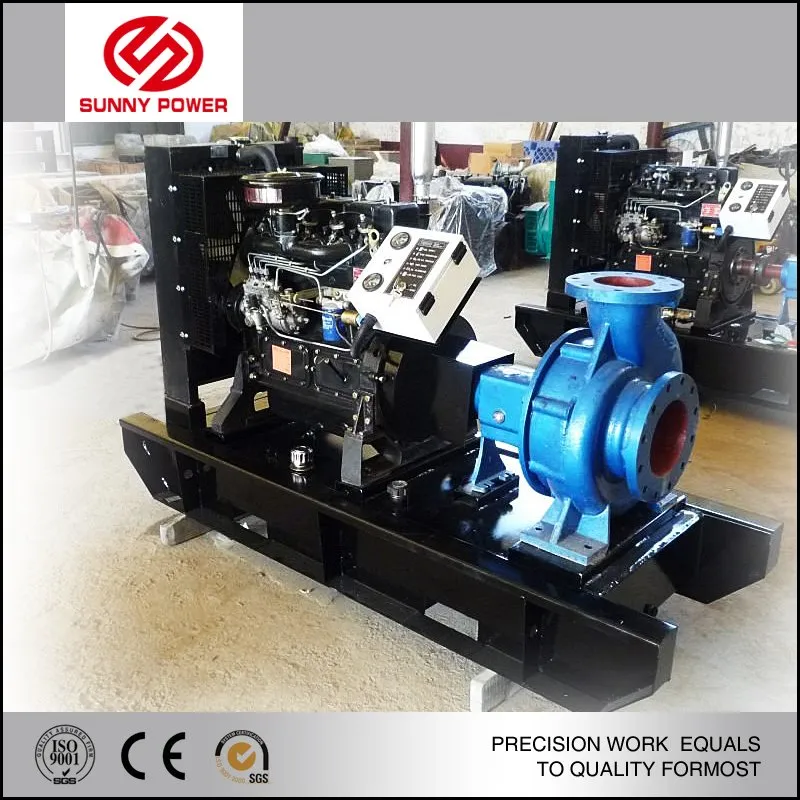
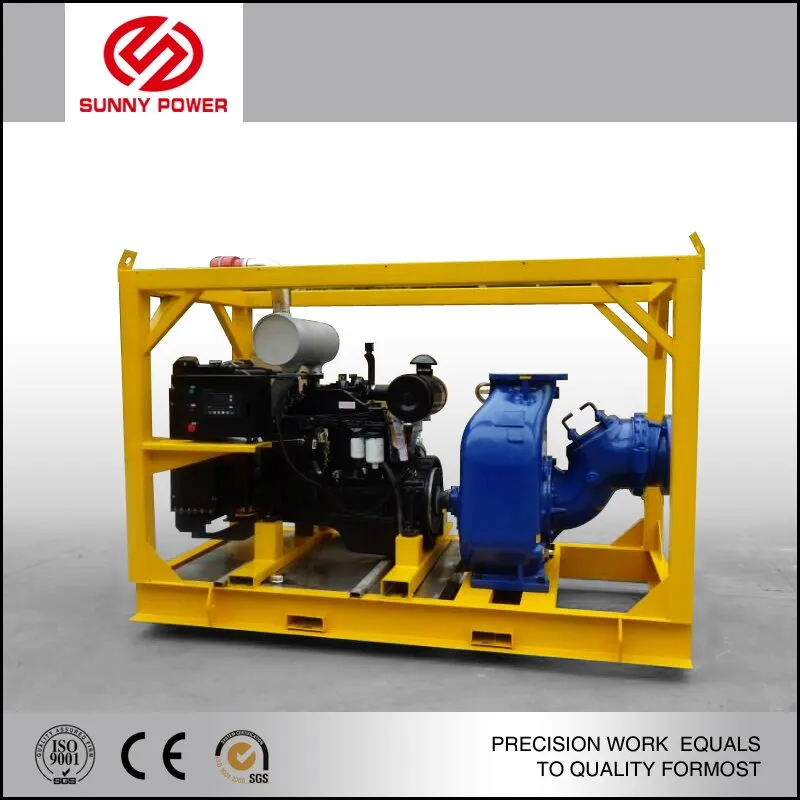


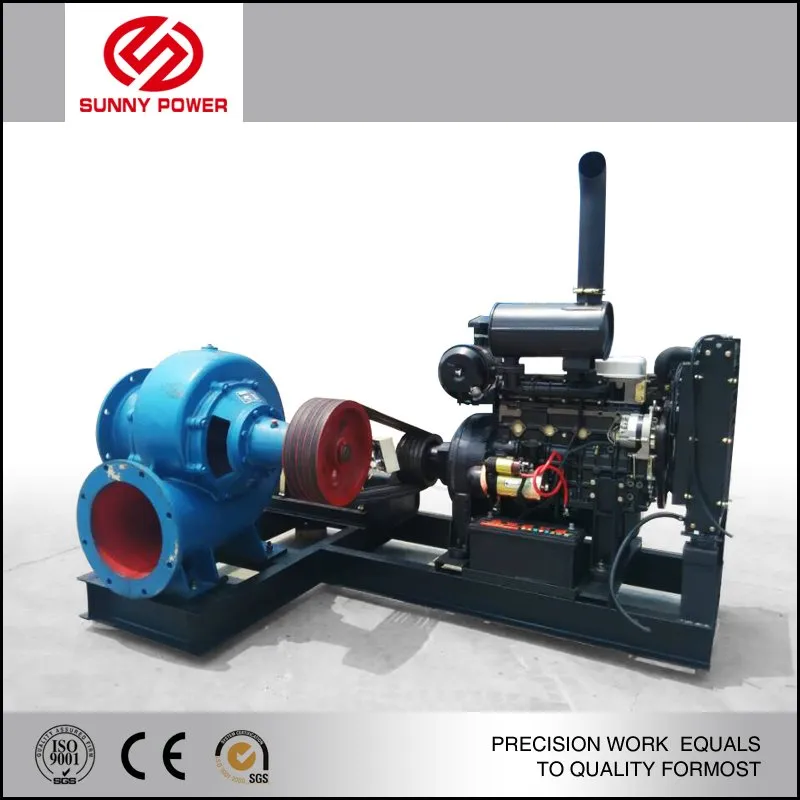
Advantages of PTO Water Pump
PTO pumps are maintenance-free
If you have ever attempted to affix a damaged water pump, you know how challenging and troublesome it is. It is why maintaining your equipment interval is vital. But in PTO pumps, there is nothing to stress about as it is practically maintenance-free. It is because they don't utilize their engines. PTO pumps are straightforward to maintain and come without the stress of gas leaking down the pump spark plugs or, over time, required to be replaced. The solid fabrication of the pump consisting of a powder-coated steel frame ensures years of dependable use.
PTO water pumps are robust
The crucial factor to consider which pump suits you best is looking for a pump that can withstand 30,000 gallons per hour (GPH). Pumps with a greater GPH capacity do not work any distinctly than less powerful pumps; yes, they pump more water faster. But it would be helpful if you kept in mind that most of the PTO pumps estimate output in gallons per minute (GPM).
PTO pumps are easy to use
Due to their extendable size and performance capabilities, you may think using PTO Pumps For Tractors would challenge setting yourself up. Still, you would be amazed to see how conveniently accessible it is. Without seeking help from anybody, back the tractor up to the pump, hook up the pump, and get to work. The other conveniency of these PTO pumps is independent of any tools for setting up and tearing down.
What Is PTO Water Pump
PTO pumps (sometimes called trunk pumps) connect directly to the back of a tractor and are powered using the gas engine's driveshaft, essentially converting rotational power into hydraulic power via the power take-off.
Features of PTO Water Pump
This portability makes it ideal for water transfer, spraying, Fire fighting and washing down. It can be used for non-corrosive liquid transfer. The pump is PTO driven and operates on a 540RPM PTO speed.
The roller pump consists of cast iron housing, a rotor with nylon rollers, a cover, two hose connections, a chain for rigid fastening on the tractor and a brass valve for pressure regulation.
Also included in this Kit is a suction hose of 3m with a strainer and a 7m wash-down hose with a nozzle.
This roller pump is equipped with a by-pass to recycle liquid and subsequently to close output flow.
This pump rotates in a clockwise direction only(the direction of the arrow on the pump) and fits a standard 6-spline PTO output shaft directly on the back of your tractor.

PTO is perfectly ideal for those who serve the agricultural industry. They are easy to use, compelling can prime in seconds, and can give an extendable lifetime. In addition, they don't possess an engine and are practically maintenance-free. Therefore, it is easy to point out the PTO water pump anywhere you can apt your tractor following to a pool of water to pump it elsewhere.
Typical applications for PTO water pumps are:
- Golf course pond maintenance
- Draining ponds or small bodies of water
- Use with fire engines
- Crop irrigation for fields/farms
- Retention pond pumping
- Irrigation on farms or other agricultural areas
Flow Rate
Flow rate refers to a water PTO water pump's efficiency. The rate denotes the time the PTO water pump takes to move a certain amount of water. Typically, the measurement records the number of liters per minute.
Choose a PTO water pump that can move enough water for your needs. If you are looking to supply water to a farm or job site, a flow rate above 2500 liters per minute is necessary. In contrast, a flow rate of about 200 liters per minute may be perfect for normal household water requirements.
Inlet Size
The average measurement of the inlet ranges from 1 to 6 inches, although bigger sizes exist. Generally, a big inlet guarantees faster water speeds at the outlet. If you want to complete your job quickly, choose a pump with a relatively larger inlet.
Maximum Head
Maximum head refers to the farthest distance from which the pump has to pull the water. The maximum head becomes greater as the depth increases.
Normally, you need to select a pump with a maximum head that is slightly greater than the water depth. This choice is meant to cater to the inevitable fluctuations in water levels. For example, if you have a water well that is 50m deep, your water pump should have a depth of 60m.
Pump Capacity
PTO water pump capacity refers to the amount of energy the pump requires to move a specific amount of water. This energy is usually in the form of electrical power. The optimal pump capacity depends on the required water discharge and depth. A pump with high capacity will perform better but use a lot of electricity.
Size of the House
The size of your house will determine the type and model of the selected pump. The pump choice will also depend on the type and number of appliances in your house that use water.
PTO water pump manufacturers typically measure pump size in gallons per minute (GPM). A pump that measures 12 GPM can supply enough water to a four-bedroom house. Such a pump allows you to use every fixture and appliance daily.
Type of PTO water pump
PTO water pumps are available in many types. The first type is a submersible pump that consists of a valve, motor, and pump. The submersible pump can function properly inside the water as long as you submerge the pump fully.
Jet pumps are another common type of pump that you can use in your home. These pumps have a motor that will push water at high speeds.
You can also choose a centrifugal pump that comes with a fan. This pump uses a suction mechanism and is more affordable than other types of pumps.
PTO water pump Environment
Outdoor pumps require special materials and installation for protection from weather elements. For instance, the pump can easily freeze when the temperature drops. Other environmental considerations include dust and vapors.
Water Properties
Water may have different properties that can affect the performance of your PTO water pump. You need to know the temperature and viscosity of the water before you buy a pump. Also, consider if there are any solids present in the water.
How Do PTO Water Pumps Work?
A PTO water pump is used with farming machines (and all tractors having a power take-off at 540 repetitions per minute) to convert rotary power into hydraulic power.
What PTO Does
This power is then used to run any hydraulic hookups such as backhoes, cotton pickers and cotton balers, oscillating power mowers and city street sweepers. Other applications include running construction equipment, dump trucks and fire engine pumps.
PTO Shaft
The power take-off is a drive shaft that provides an outlet for machines and farming tools to run on the power of a tractor's engine. The power take-off is accessed from the main transmission clutch. The power take-off is accessed most often via an air valve or through a mechanical, electrical or a hydraulic pump to transfer mechanical energy through a fluid system on the vehicle. A hydraulic motor converts the fluid force back into rotary or mechanical force.
Accessing the PTO
The PTO water pump is slid onto the power take-off splined shaft in a truck or farming tractor transmission system. A torque arm is used to restrain the rotation of the farming machine's PTO shaft. Marine engines also have power take offs, but these are often permanently mounted and are capable of outputting power to fire pumps. Industrial machines will have a shaft and bolted joint for transferring power to other machines or power tools. A PTO water pump will work to run a water pump (i.e. fire/ water truck), raise/ lower dump truck beds and mechanical arms, or even power air blowers.
Pump Fitting
The coupler bolt is removed from the splined end of the power take-off shaft before implementing the PTO water pump. The PTO water pump will fit onto the power take off shaft on the tractor. The tractor shaft and the PTO water pump are mated and then secured with set screws and nuts. The tractor engine is idled to begin pumping.
The PTO water pump body must not oscillate with the power take-off shaft on the tractor or any other vehicle. The torque bar chain is secured to the draw bar (the chain is attached to the tractor, with the other end of the torque chain connected to the pump). Some slack is allowed on the chain to prevent damage to the PTO water pump. The pressure hose from the tractor is connected to the motor port and the return line.
How to Maintain PTO Water Pump


Determine PTO water pump maintenance frequency
Here, we advise that you follow the initial guidelines from the manufacturer. Ask questions like:
Will lines or PTO water pumps have to be disabled?
How often do I need to run a routine check?
Select a time when the system is down and use common sense when deciding the time and frequency.
Observe and familiarize yourself with the system
Please get to know your system and make a point to observe your PTO water pump while it is still running. Make a note of leaks, unusual sounds or vibrations and unusual odours. This will help you detect a malfunction faster.
Safety first
An essential health and safety rule is to shut down before performing your maintenance and systems check correctly. Proper isolation is essential not only for electrical systems but for hydraulic systems as well. You do not want to send some jolts of electricity to your body system for lack of meticulousness.
Mechanical inspection
Ensure mourning points are secure, check the mechanical seal and packing, inspect the PTO water pump flanges for leaks, check the couplings and clean filters.
Lubrication
Friction is no good for anything, but especially your PTO water pump. Therefore, it would be best to adequately lubricate the motor and PTO water pump bearing per the manufacturer's guidelines.
While you are at it, don't go overboard with the oil, as over greasing can cause more damage than under greasing.
If your PTO water pump bearing has a vent cap, remove the cap and run the PTO water pump for 30 minutes before reinstalling the cap. This will allow excess grease to work its way out of the bearing.
Electrical/motor inspection
Start with inspecting and ensuring all terminations are tight.
Move to the motor vents and windings for dust/dirt build-up and clean according to manufacturer's guidelines.
Next, work your way to the starter/contractor for arcing, overheating, etc.
Replace damaged seals and hoses
Please do not continue indefinitely managing hoses, seals, or O-rings that show wear or damage; replace them immediately. Using a temporary rubber assembly lubricant will ensure a tight fit and prevent leaks or slips.
Call the experts
Yes, when in doubt, don't DIY. Instead, call a PTO water pump expert and save yourself the time, cost and embarrassment of failing woefully at another's job.
Our Factory
Weifang Sunny Power Machinery Co., Ltd. is located in China Power Capital - Weifang City, owning Chinese leader and world famous diesel engine manufacturers.
Having professional and experienced workers, supported by strong technology and advanced equipments, we successfully formed strict and perfect production procedure from design, production, testing, to after-service, which guarantee the stable quality and technology innovation. We have been approved by ISO9001 and CE.
FAQ
Q: What is the function of the PTO pump?
Q: How do you use a PTO water pump?
Q: What are the different types of PTO pumps?
Q: How does a PTO system work?
Q: Can you pump and roll with a PTO pump?
Q: What PSI should my water pump be at?
Q: Is 70 psi too high for a well pump?
Pressures higher than 60 psi can damage your pipes, fittings, and switches. This damage can lead to plumbing failure and costly leaks. If the pressure is set at 80 psi, it's very possible the pump will be unable to reach the cut-off pressure.
Q: How do I get my water pump to work again?
Q: What is the most common problem of water pump?
Q: How do I test my water pump?
Q: When replacing a water pump what else should you replace?
Water pump (obviously)
Timing belt.
Crankshaft bolt.
Drive belt(s) for alternator, power steering pump, AC compressor.
Upper and lower radiator hoses.
Coolant / Antifreeze.
Q: How does a PTO water pump work?
Q: How does a PTO pump work?
Q: Can you reset a water pump?
Q: What is a PTO?
Q: Can you pump and roll with a PTO pump?
Q: What are the types of PTO pump?
Q: How do you use a PTO water pump?
Q: Can you fix a water pump yourself?
Q: Why does my water pump keep turning on and off?
Hot Tags: pto water pump, China pto water pump manufacturers, factory, diesel boat motor, tractor rear driving hydraulic pump, 6inch self priming water pump, diesel water pump for agriculture, Mining Pump With Trailer, vertical self priming monoblock pump