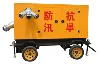
Mobile Trailer Features
I. Towing System
The mobile trailer comes with a smartly designed, flexible towing bar. Precise calibration makes hooking up to different towing vehicles a breeze, even in tight streets or tough terrains. Whether on highways or at construction sites, it tows smoothly and efficiently, boosting mobility for quick deployment.
II. Braking System
Safety is key with the trailer's unique braking setup. It combines manual, pneumatic, and hydraulic brakes. Manual brakes are handy for short - distance or emergency stops. Pneumatic brakes, using compressed air, offer quick and strong stops at high speeds. Hydraulic brakes maintain consistent force during long - term or heavy braking. Together, they ensure safe towing in all conditions.
III. Protective Enclosure
The trailer features an aluminum or steel container - style enclosure. Aluminum ones are light yet rust - resistant in rain, while steel enclosures are tough, with high strength and toughness. In extreme weather like heat, rain, or dust, the enclosure shields the power station units inside, keeping components safe from elements for stable operation and continuous power generation.
IV. Power Transmission
Equipped with a 30 - meter main cable, the trailer has a wide power reach. In large construction areas with scattered equipment, or in remote field exploration and rescue scenarios, it can transmit power over long distances, meeting users' needs across vast work areas.
V. Power Output
The main cable's quick - plug design is a major plus. With a standard interface, it's easy to use, requiring no special tools. In emergencies, users can connect quickly to supply power fast, ideal for time - sensitive situations like medical rescue or filming.
VI. Power Endurance
The trailer's fuel tank allows the power station to run at full load for 8 hours. This is great for long - term tasks, such as remote communication base station maintenance where fuel resupply is difficult. It also supports events like outdoor music festivals, ensuring continuous power and reducing shutdown risks.
VII. Support Structure
Manual or hydraulic support legs are crucial for trailer stability. Manual legs are simple to adjust for ground - level stability. Hydraulic legs, powered by a strong system, handle heavy loads and offer precise height adjustment. Once placed at work sites, these legs can bear the trailer's weight for long, staying stable against wind and ground vibrations to safeguard power generation.