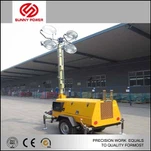
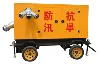
As the name implies, fire pumps are used for fire fighting. Fire pumps are imported products from abroad and are divided into different categories according to different classification methods. With its fully sealed, leak-free, and corrosion-resistant characteristics, it is widely used in environmental protection, water treatment, fire fighting, and other departments. It is used to pump various liquids and is an ideal pump and fire fighting system for creating leak-free, pollution-free civilized workshops and civilized factories. The types of pumps are similar, but the head and flow rates are different. Fire pumps should meet the requirements of the standard when installed.
1. Before installing the fire pump, the product certificate should be checked, and its specifications, models, and performance should be consistent with the design requirements, and it should be installed according to the installation and use instructions;
2. Before installing the fire pump, the concrete strength, seismic isolation device, coordinates, elevation, size, and bolt hole position of the pump foundation should be checked;
3. Before installing the fire pump, the distance between the fire pumps and between the fire pump and the wall or other equipment should be checked, and the requirements of installation, operation, and maintenance management should be met;
4. The control valve on the suction pipe of the fire pump should be installed after the fire pump is fixed on the foundation. Its diameter should not be less than the diameter of the suction port of the fire pump, and the control valve without a reliable locking device should not be used. The control valve should be a groove or flange valve;
5. When the fire pump and the fire pool are located on two independent foundations and are rigidly connected, a flexible connection should be added to the suction pipe;
6. There should be no air pockets and air leakage on the horizontal section of the suction pipe. When the reducer is connected, a flexible connecting pipe should be added to the suction pipe;
7. A muffler check valve, a control valve, and a pressure transformer should be installed on the outlet pipe of the fire pump; a pressure gauge and a pressure switch should also be installed on the main outlet pipe of the system; a buffer device should be added when the pressure gauge is installed. A plug should be installed between the pressure gauge and the buffer device; the pressure gauge range should be 2 to 2.5 times the system working pressure when there is no design requirement;
8. The installation of the seismic isolation device and the flexible joint of the water inlet pipe of the fire pump should meet the design requirements, and there should be product instructions and installation instructions.