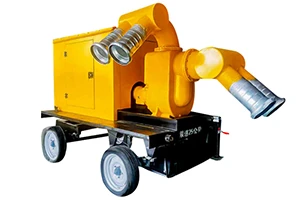
The parts of diesel self-priming pumps designed by different companies are different, but the general structure is: pump body, pump cover, impeller, shaft, bearings and other parts. Diesel self-priming pumps use physical centrifugal means to create a pressure difference between the inside and outside of the pump to suck water up.
The materials of the diesel self-priming pump can be roughly divided into stainless steel and fluoroplastic alloy, which can cover more than 70% of the corrosion-resistant working conditions.
Installation methods and essentials:
1. Before installation, check whether the fasteners of the unit are loose and whether the pump body flow channel is blocked by foreign matter to avoid damaging the impeller and pump body when the water pump is running.
2. The suction and discharge weight should not be added to the water pump during installation. The pump body itself is not allowed to withstand excessive loads to avoid deformation of the pump body.
3. The installation height of the suction inlet should not exceed 0.5-5 meters. When conditions permit, the installation height of the suction inlet should be as high as possible to withstand the low water storage level of the pool, and the length of the suction pipe should be shortened as much as possible and fewer elbows should be installed. This will ensure It is beneficial to shorten the self-priming time and improve the self-priming function.
4. Valves, flanges, etc. in the suction pipeline should be strictly prevented from leaking air or liquid, that is, no air leakage is allowed in the suction pipeline.
5. In order to maintain a certain amount of storage liquid in the industrial pump body, to achieve better self-priming ability and to prevent dry friction of the mechanical seal, the pump inlet must be higher than the center line of the pump shaft.
6. For the convenience of maintenance and safe use, install a regulating valve on the inlet pipeline of the pump and a pressure gauge near the pump outlet to ensure operation within the rated head and flow range, ensure normal operation of the pump, and increase the pump's efficiency. service life.
7. During installation, the electrostatic grounding resistance of the pump and pipelines should meet the specified requirements.
Routine maintenance:
1. First of all, the sewage pump should have a dedicated person to do daily management and maintenance, including regular inspection of the insulation between the sewage pump winding and the casing.
2. After working with relatively viscous liquids, the self-priming pump should be placed in clean water and run for a few minutes to ensure the cleanliness of the pump body.
3. If the sewage pump is not used for a long time, do not immerse it in the working liquid for a long time to reduce corrosion of the sewage pump and moisture in the electronic windings and increase its service life;
4. Under normal working conditions, the oil should be added or replaced after every 300 hours of use of the sewage pump, and the status of the mechanical seal components should be checked.
5. The disassembled and repaired sewage pump normally needs to be checked for air tightness in an environment of 0.2MPa.
6. After replacing the sealing ring: After the water pump enters the water, observe it for a period of time. If the water pumping volume decreases or the efficiency decreases, remove the sewage pump and check the distance between the impeller component and the sealing ring.