Weifang Sunny Power Machinery Co., Ltd. is located in China Power Capital - Weifang City, owning Chinese leader and world famous diesel engine manufacturers.
Having professional and experienced workers, supported by strong technology and advanced equipments, we successfully formed strict and perfect production procedure from design, production, testing, to after-service, which guarantee the stable quality and technology innovation. We have been approved by ISO9001 and CE.
Why Choose Us
100% Satisfaction Guarantee: We're so confident you'll be happy with our services, we guarantee it.
Extensive Experience: Our team of professionals have been in the business for quite some time. Let us deliver solutions that work the first time!
Fair & Competitive Pricing: Our pricing structure is designed to make a modest profit so that we can continue to be a Hero another day.


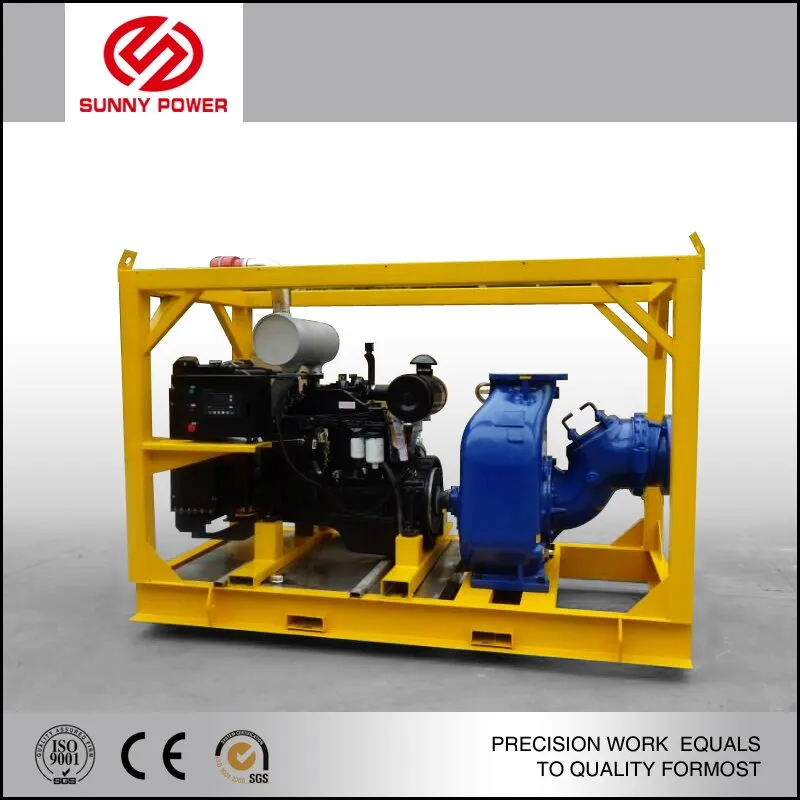


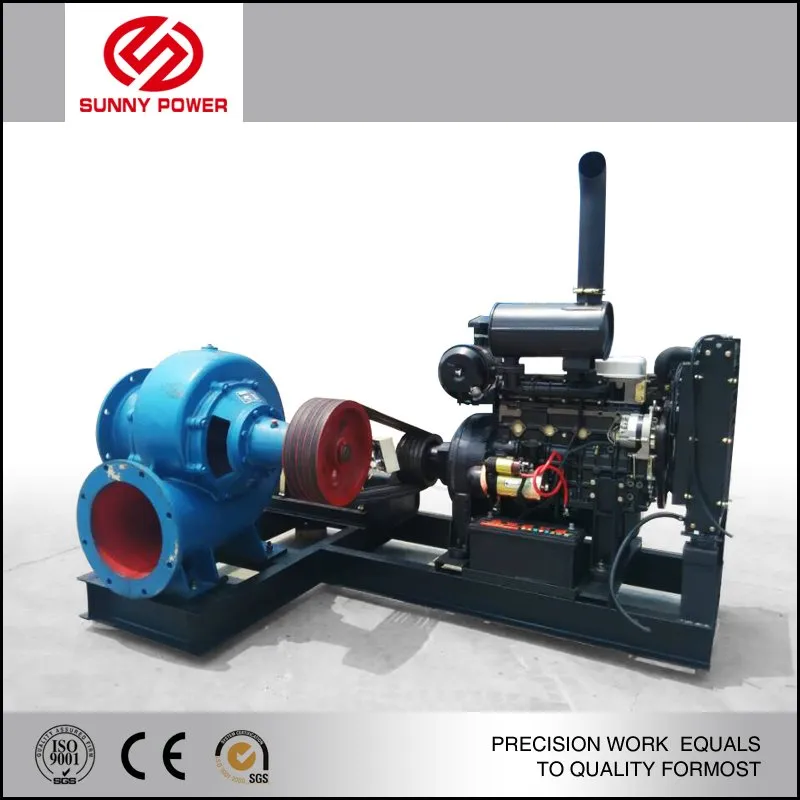
Advantages of Dewatering Mining Pump
Prevention of Flood and Waterlogging: When used in mines, mine dewatering pumps can remove water from the mine before it can cause flooding. Such pumps are highly powerful and run continuously without major issues. This ensures the miner's safety and avoids any damage to the infrastructure.
Ensure a Dry Work Environment: Industrial dewatering pumps help to keep the area dry. With the help of dewatering pumps, mines can be made more workable by eliminating the presence of water. As a result, the working conditions in the mine are improved.
Improve Ventilation: Removing water with mine dewatering pumps is one way to enhance mine ventilation. Better airflow can help to reduce the risk of miners developing health problems due to exposure to harmful gases and dust.
Equipment Protection: Water accumulation can damage mining equipment and machinery, leading to costly repairs or replacements. Industrial dewatering pumps prevent water from entering critical machinery, extending its lifespan and reducing maintenance costs.
Environmental Sustainability: Proper water management in mining operations is essential for minimizing the environmental impact. Mine dewatering pumps help prevent the release of contaminated water into nearby ecosystems, ensuring compliance with environmental regulations.
Water Access to Mining Sites: Mine dewatering pumps also provide access to water for miners. The equipment pump clean water to the mining sites, where the water can be used for drinking, washing, and other purposes.
What Is Dewatering Mining Pump
A dewatering pump is pump installed below groundwater level, to reduce the water level and then maintain it at this level.
The Importance Of Dewatering Pumps In The Mining Industry
Groundwater And Hydrology
Groundwater is water that drains into mines naturally through gravity. Prior to the invention of mine dewatering pumps, mine workings could only continue as far as the mine workers could channel the water to a lower level, by cutting adits and soughs into the mine from lower down the mountain. Certain geological conditions allow water to be drained into underground streams or filtered through porous rock, even then pumps are still required for times of excess rainfall.
Once the water table is reached, pumps are the only viable way to keep the mine operational. Hydrological assessments are a key feature of mine development, with hydrologists providing valuable scientific insight and forecasts of a mine's interaction with the area's water flows. Of course, the water table level varies year to year, even season to season, so reliable dewatering pumps are needed in any mining operation.
Mining Water Pumps
Such is the importance of dewatering pumps to mining, that the extraction industry has birthed many innovations (the steam engine being one) in its pursuit of more reliable, capable and efficient dewatering pumps.
Mine Dewatering Problems
Issues arising from excessive, or uncontrolled mine dewatering can include lowering the water table, leading to a possible drying up of aquifers or the lowering of streams and river levels. A well-planned pumping system can restore cleaned water back to its natural receptor, rather than letting it bypass a drought-sensitive area through gravity-drainage. In fact, an early form of mining pump was proposed as mitigation to neighbours' mine water concerns in a planning consent application for a mine in 1706.
Acid mine drainage (AMD) is a contemporary problem with historic abandoned metal mines. Old mining techniques were not as efficient as they are today, leaving a high amount of water-polluting minerals in the ground. Over time, groundwater that floods this exposed rock absorbs its metal sulphides (lead, zinc, copper etc), damaging the water environment downstream. Iron deposits smother river beds whilst highly acidic, toxic, sulphur-laden water is a killer of aquatic life. Even inert silt such as sand blocks out life-giving sunlight in turbulent river water.
Mine water can become contaminated by sand, grit and rock particles that present problems of premature wear and blockage of pumps. Dewatering pumps made for mines are built with abrasion-resistant materials and to a design that allows the passage of silt thickened water and pebbles. Should the solids content reach a slurry level, then special slurry pumps are used by miners.
Mine Water Management
Mining pumps enable mining operations to not only continue profitably at a site level, but also continue to open up increased sustainability and environmental gains. By taking control of mine water, it can be monitored, treated and pumped to where it needs to be for the benefit of reduced flood and drought risk, prevention of water pollution and support of waterborne life.
Tailings, the waste materials generated from mining, represent both an environmental and cost challenge for mineral processing companies. Pumps are indispensable in managing tailings, including their transportation, storage, and disposal. Tailings can be thickened using specialized pumps, allowing for more efficient transportation and reducing the need for large storage facilities. Furthermore, pumps facilitate the creation of tailings slurries, which can be piped to designated storage areas, dewatered or used for backfilling.
Mining A Sustainable Future
Pumps are the tool which gives mining companies the control they need to avoid the reputational and financial risk of water pollution and mitigate planning concerns over new mine development. By choosing energy-efficient, long-lasting pumps, responsible mine operators are positively contributing to a brighter, sustainable future.
Whilst mining has changed over centuries; tools and techniques used and new ESG standards developed, the importance of effective mine pumps remains as central as ever. From the bronze-age to the lithium-age, the mining industry and its pumps remain at the front of humanity's progress.
Dewatering slurry pumps for mining operations are specially designed to handle abrasive fluids and work continuously in harsh conditions. There are different pumps used in water removal based on applications.
Submersible mining pumps for dewatering
As the mining sites are usually below ground level; there is a tendency for water accumulation. Therefore, the majority of industrial mine dewatering pumps in mines are submersible pumps. You can find either an electric motor or a diesel engine-driven submersible pump immersed in the water pumping water. In addition to their adaptability to different water conditions, submersible mining pumps come in a wide range of sizes and capabilities.
Vertical turbine pumps for dewatering
Due to the powerful output and high efficiency, mines also frequently use vertical turbine pumps. They are either electric or diesel-powered dewatering pumps for mining, normally installed on a platform above the water. Pumping large quantities of water with a high sediment content is not a problem for vertical turbine pumps.
Horizontal multistage centrifugal industrial dewatering pumps
When water needs to be pumped over a long distance or up to a high elevation, horizontal multistage centrifugal industrial dewatering pumps are utilized in mines. These pumps are powered by either an electric motor or a diesel engine and are often installed on a platform that extends out over the water.
Piston pumps for dewatering
Piston pumps use reciprocating pistons to pump water, making them suitable for deep mining applications. They can handle high pressures and are often used in underground mines where significant water inflow is present.
5 Things to Consider When Choosing a Dewatering Mining Pump


Static Head
You need to determine the static head that any pump needs to overcome. The required flow will not be achieved, if the pump cannot produce enough pressure to overcome the vertical distance.
Depth of the Underground Sump
The pressure that the dewatering mining pump needs to develop is the crucial factor while focusing on the depth of the underground sump.
The static pressure available in the system to force the water into the pump is the available net positive suction head (NPSHa). The type of the pump influences the NPSHa.
Flow rate
When selecting a dewatering pump it is also important to determine the flow rate. The flow rate is the flow needed to remove the amount of water properly to keep the mine dry. At this stage, you must also consider, what style of pump is most suited for the application. For the self-priming pump, you must find out what is the length of the suction line. The size of the suction line of the pump must be equal to, or greater than, the size of the suction or inlet port. This is important to reduce the possibility of suction cavitation.
Capabilities of the pumping system
The efficiency of the pumps may change, due to the nature of dewatering pumping. The pump's performance may move away from the best efficiency point (BEP), as the pressure changes due to wear, or other factors. Flooding out or the loss of critical equipment and operational time could occur, if the pump selected is too small, or there are less number of such pumps. On the other hand, the motor could burn on the pump due to many starts per hour, if the pumps are too large. Because of many starts per hour, the motor will have no time to cool off before starting again. Thus, the pump, that is starving for water, experience suction cavitation.
Efficiency
The users usually go for larger sizes of pumps, on the basis that they can cover a multitude of jobs, but efficiency is often sacrificed in doing so. To reduce fuel usage and operating costs, developments in technology are of great help. Newer types of pump have been introduced in recent years, that are specifically designed to reduce fuel consumption at times of low load and cope with fluctuating application demands. This is done without running up high-fuel costs or risking any kind of burnout.
Thus, we recommend that buyers must note that bigger is not always better and consider newer types of technology, than just replicating or repeating orders from the past.
Check & Secure the Mounting Bolts
Excessive vibration and dewatering mining pump leakage can affect your mounting bolts. You should check that your mounting bolts are tight, secure, and have not corroded.
Checking your mounting bolts should form part of your annual maintenance schedule but may need to be done more often depending on your installation and dewatering mining pump.
Check for Fluid Leaks
Unexpected fluid leaks are not only messy, but they can result in reduced performance and a loss of dewatering mining pump output. Your dewatering mining pump is not designed to leak, so, if there's a leakage, it should definitely be investigated.
dewatering mining pumps can suffer leakages from mechanical seals, stuffing boxes and flange gaskets, while dewatering mining pump motors can also experience oil leakages, so it's a good idea to check these as part of your monthly routine maintenance.
Check and Adjust Packing
If your dewatering mining pump is a packed dewatering mining pump, there should be some flow of process fluid coming through the packing, and there should be some fluid flow through the packing. Typically, manufacturers recommend 1 drip per 10 seconds; enough that you should see fluid coming through the packing, but it should not be excessive amounts of fluid. Use caution, as overtightening the packing can damage the dewatering mining pump shaft.
Packing also needs to be changed periodically. While inspecting the packing, verify that the dewatering mining pump shaft is not showing signs of wear from over-tightening or the packing has hardened from lack of fluid lubrication.
Check for Proper Oil Level, Oil Leaks & Grease
Insufficient or too much lubrication can cause bearing failure of your dewatering mining pump. Checking for oil leaks from the drive should be done as part of the annual inspection of your dewatering mining pump.
You should also check the gasket condition, and if there is a leak, you may need to replace the gasket or mechanical seal.
It's also important to maintain the correct oil level and use the correct grease and oil as specified in your operating manual.
Check the dewatering mining pump Pressure and Flow
It's important to regularly check your discharge gauge to ensure your dewatering mining pump is operating with adequate pressure. The correct pressure will vary depending on the operating parameters of your dewatering mining pump, so it's best to check your operating manual.
You should review your dewatering mining pump performance and compare it to the factory dewatering mining pump curve that would have been supplied with the dewatering mining pump. Typically, if the pressure is running too high or low, it's good to have it professionally diagnosed to determine whether it needs to be repaired. Pressure and flow are relative to each other so they should be checked together.
Inspect the Temperature
The dewatering mining pump bearings keep the shaft axial end movement and lateral deflection within the proper limits for the impeller and shaft seal. It's possible that those parts can overheat, so you need to ensure your bearing temperature remains consistent. A lack of maintenance can result in premature wearing of your bearings.
The ideal temperature depends on your dewatering mining pump and the bearings and you should follow the OEM recommendations.
Don't forget to check the temperature of the motor as part of your routine maintenance. This work should be done at least monthly.
Inspect & Clean Motor Vents
Dust and debris build-up can affect your dewatering mining pump's operation, so you should regularly check the motor for cleanliness. You'll need to shut the motor down and de-energize it first.
To remove the dirt, you can blow the dust off with a high-volume, low-pressure air blast. If the motor is very dirty, it may need to be sent to a motor shop to be professionally cleaned and dried.
Cleaning motor vents should form part of your preventative maintenance routine or part of a planned overhaul of your motor.
Inspect Condition of dewatering mining pump Casing
The dewatering mining pump casing houses the dewatering mining pump impeller and rotating assemblies as well as retains pressure, so it's important to check it regularly for damage.
Our Factory
Weifang Sunny Power Machinery Co., Ltd. is located in China Power Capital - Weifang City, owning Chinese leader and world famous diesel engine manufacturers.
Having professional and experienced workers, supported by strong technology and advanced equipments, we successfully formed strict and perfect production procedure from design, production, testing, to after-service, which guarantee the stable quality and technology innovation. We have been approved by ISO9001 and CE.
FAQ
Q: How do dewatering pumps for mining differ from dewatering pumps used in other industries?
Robust construction
Handling high flow rates
Capability to handle abrasive materials
Submersible capability
Integration with mine control systems
Q: What are the key factors to consider when selecting dewatering pumps for mining applications?
The depth of the water to be pumped.
The capacity of the pump
The type of water to be handled
The availability of power supply,
Ambient temperature
Cost
Q: What are the advantages of centrifugal dewatering pumps in mining operations?
High efficiency
Robust construction:
Ease of installation and operation:
Low maintenance requirements
Q: Are there specific regulations or safety considerations for industrial dewatering pumps in the mining industry?
Regulatory compliance with local, regional, and national regulations
Mine Safety and Health Administration (MSHA) standards
Risk assessments and hazard mitigation
Environmental considerations
Training and competency in awareness of potential hazards, emergency procedures, and proper use of personal protective equipment (PPE).
Q: Hat kind of pump is used for dewatering?
Q: What is the most common method of mine dewatering?
Q: How do you pump water out of a mine?
Q: What is the process of mine dewatering?
One open-pit dewatering method is to use pumps to extract water from the lowest levels of the mine. However, it is usually not enough to perform only this step. The groundwater table around the mine area has to be lowered to guard against the pit continually being filled with more and more water.
Q: What is the difference between a water pump and a dewatering pump?
Q: How do I choose a dewatering pump?
Consider the Water Source. ...
Check the Solids Content. ...
Determine the Flow Rate Required. ...
Measure the pH. ...
Measure the Pumping Distance. ...
Calculate the NPSH. ...
Calculate the Required Static Suction Lift. ...
Rely on Expert Advice.
Q: What is gravel pump mining?
Q: What pump is used in underground mines?
Q: How does a dewatering pump work?
Q: Why is dewatering important in mineral processing?
Q: What is the mechanical dewatering process?
Q: Which water pump is more powerful?
Q: How many types of dewatering pumps are there?
Q: What size is a dewatering pump?
Q: Why did water need to be pumped out of mines?
Q: What is the most efficient type of water pump?
Centrifugal pumps: Centrifugal pumps are efficient because they use a rotating impeller to create a flow of fluid, which reduces the friction and energy losses in the system.
Hot Tags: dewatering mining pump, China dewatering mining pump manufacturers, factory, diesel water pump for agriculture, compact silent generator, tractor rear driving water pump, tractor rear driving vertical submersible water pump, small marine genset, diesel powered generator portable